
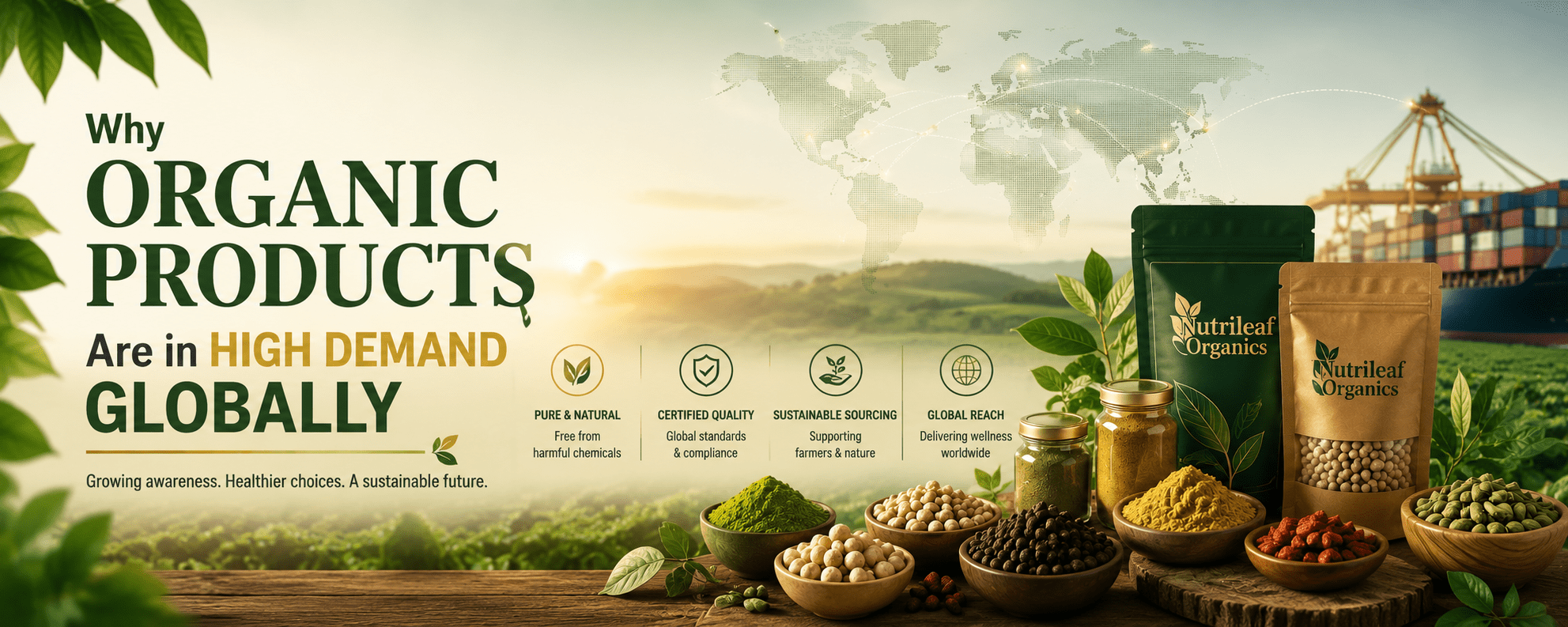
The global food industry is undergoing a significant transformation as consumers become increasingly conscious about health, sustainability, and food quality. This shift has fueled unprecedented growth in the global organic market, creating new opportunities for farmers, manufacturers, and organic products exporters worldwide.
Today, organic products are no longer considered niche offerings. They have become an essential part of modern lifestyles, with consumers actively seeking food products that are free from harmful chemicals, produced sustainably, and beneficial for both personal health and the environment.
The global organic market has experienced remarkable growth over the past decade. Increasing awareness about the health risks associated with synthetic pesticides, chemical fertilizers, and heavily processed foods has encouraged consumers to choose organic alternatives.
Countries across North America, Europe, the Middle East, and Asia-Pacific are witnessing strong demand for organic food products, including organic spices, herbal powders, superfoods, cereals, pulses, and value-added agricultural products.
As a result, organic products exporters are playing a crucial role in connecting organic farms and manufacturers with international buyers seeking reliable, high-quality organic products.
One of the primary reasons behind the growing popularity of organic products is the increasing focus on health and wellness.
Consumers today carefully examine product labels and prefer foods that are:
Free from synthetic pesticides
Non-GMO
Free from harmful chemical residues
Rich in natural nutrients
Minimally processed
Organic products are often perceived as cleaner and safer alternatives to conventionally grown foods. This perception has significantly influenced purchasing decisions, especially among health-conscious consumers and families.
Products such as organic moringa powder, psyllium husk (isabgol), makhana, herbal powders, and organic spices have gained global popularity due to their nutritional value and natural origins.
Environmental concerns have become a major factor influencing consumer behavior.
Organic farming promotes:
Soil health and regeneration
Biodiversity conservation
Reduced water pollution
Lower chemical usage
Sustainable agricultural practices
As climate change and environmental degradation become pressing global issues, consumers increasingly support brands that prioritize sustainability.
Companies sourcing products from organic farms are viewed as responsible businesses that contribute positively to environmental protection and long-term agricultural sustainability.
Several regions are driving growth within the global organic market:
The United States and Canada remain among the largest consumers of organic products. Demand continues to rise across categories such as organic spices, superfoods, herbal supplements, and plant-based ingredients.
Countries including Germany, France, the Netherlands, Italy, Poland, and the United Kingdom have well-established organic markets. European consumers actively seek certified organic products and place a strong emphasis on sustainability and traceability.
The Middle East has emerged as a rapidly growing market for organic imports. Countries such as the UAE, Saudi Arabia, Kuwait, Oman, and Qatar are experiencing increasing demand for premium organic food products due to rising health awareness and changing consumer lifestyles.
Singapore, Japan, South Korea, Malaysia, Vietnam, Thailand, and the Philippines are witnessing significant growth in organic food consumption, creating valuable opportunities for exporters.
India has become one of the world’s most important sources of organic agricultural products.
Several factors contribute to India’s growing reputation as a trusted organic products exporter:
India produces a wide range of organic products, including:
Organic spices
Moringa powder
Isabgol (Psyllium Husk)
Makhana (Fox Nuts)
Herbal powders
Pulses and grains
Value-added agricultural products
India’s diverse climatic zones support year-round cultivation of various crops, ensuring consistent supply and quality.
Government support through organizations such as APEDA, along with increasing adoption of international quality standards, has strengthened India’s position in global organic trade.
Indian exporters can offer premium-quality organic products at competitive prices, making them attractive to international buyers.
Global buyers increasingly demand transparency and quality assurance throughout the supply chain.
Organic products exporters must demonstrate compliance with recognized standards and certifications to build buyer confidence.
Key certifications often include:
Organic Certification
APEDA Registration
FSSAI Compliance
HACCP Certification
GMP Certification
Halal Certification (where applicable)
These certifications help ensure product authenticity, food safety, and international market acceptance.
The rapid expansion of the global organic market presents attractive opportunities for importers, wholesalers, distributors, and private-label brands.
By partnering with reliable organic products exporters, buyers can access:
Consistent product quality
Competitive pricing
Certified organic products
Custom packaging solutions
Private labeling services
Scalable supply chains
As consumer demand continues to grow, businesses that invest in organic product offerings are well-positioned for long-term success.
Industry experts expect the global organic market to continue expanding as consumers prioritize health, sustainability, and transparency.
Emerging trends such as clean-label products, plant-based nutrition, functional foods, and environmentally responsible sourcing are expected to drive further growth.
For exporters, this represents a significant opportunity to build strong international partnerships and deliver high-quality organic products to markets around the world.
The growing demand for organic products is driven by a powerful combination of health awareness, environmental responsibility, and changing consumer preferences. As the global organic market continues to expand, businesses and consumers alike are recognizing the value of products that are natural, sustainable, and responsibly sourced.
For trusted organic products exporters, the future holds tremendous potential. Companies that prioritize quality, transparency, sustainability, and international standards will continue to play a vital role in meeting the world’s increasing demand for organic products.