
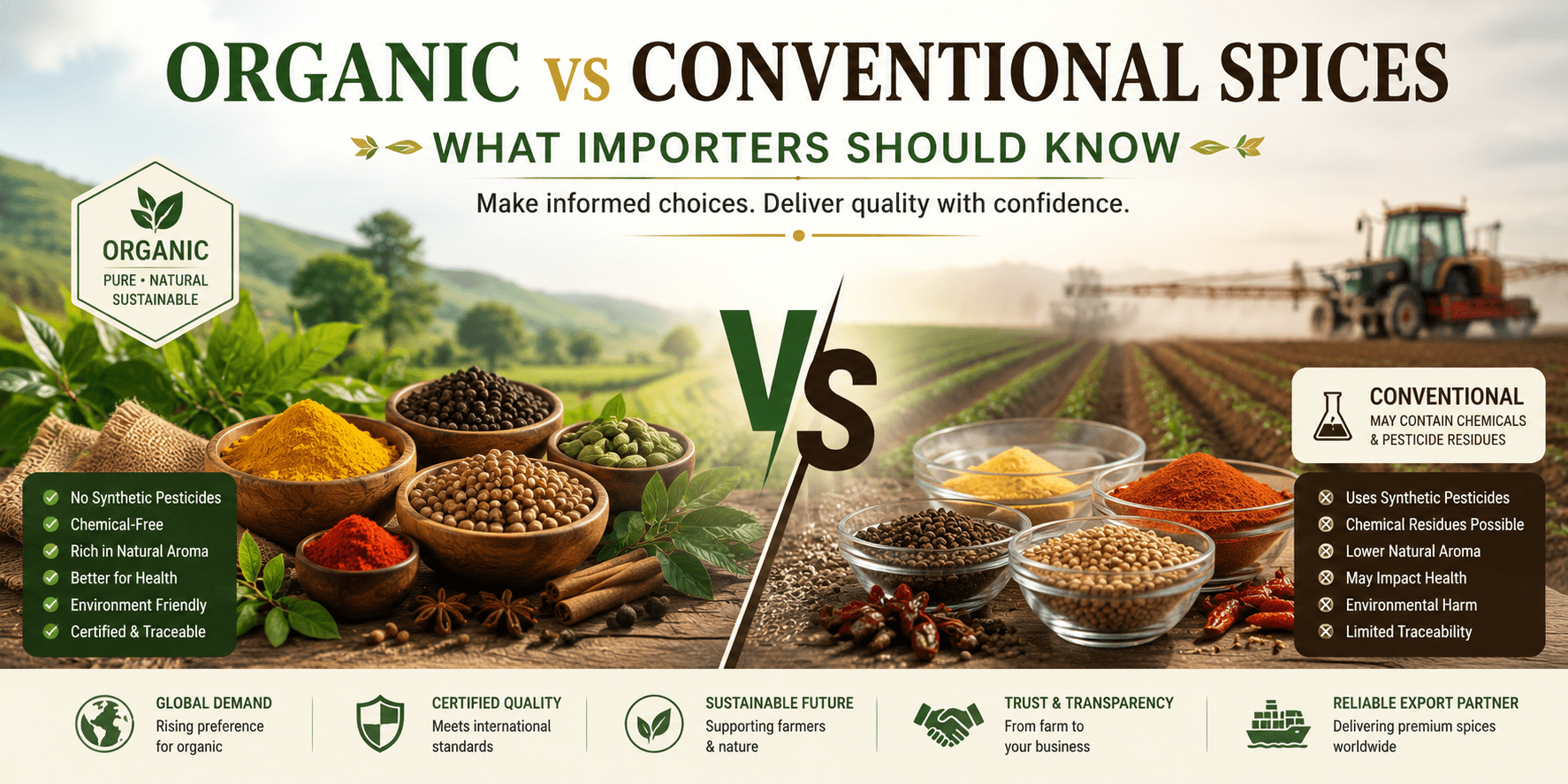
The global spice industry is evolving rapidly as consumers become increasingly conscious about food quality, safety, and sustainability. This shift has led to growing demand for organic spices across international markets, creating new opportunities for importers, distributors, retailers, and food manufacturers.
However, many buyers still face an important question: What is the difference between organic and conventional spices, and which option is best for their business?
Understanding these differences is essential for making informed purchasing decisions and meeting the expectations of modern consumers.
Organic spices are cultivated using natural farming practices without the use of synthetic pesticides, chemical fertilizers, genetically modified organisms (GMOs), or artificial growth regulators.
Organic farming focuses on:
Soil health and biodiversity
Natural pest management
Sustainable cultivation methods
Environmental protection
Long-term agricultural sustainability
Examples include organic turmeric, cumin, coriander, black pepper, cardamom, chili powder, garlic powder, onion powder, and various spice blends.
Conventional spices are grown using traditional commercial farming methods that may involve:
Synthetic fertilizers
Chemical pesticides
Herbicides
Growth stimulants
Intensive farming practices
While conventional spices often offer lower production costs, buyers may encounter concerns regarding chemical residues and sustainability.
One of the most significant differences lies in pesticide and chemical residue levels.
Organic spices are produced under strict standards that prohibit the use of most synthetic chemicals. As a result, they typically contain significantly lower chemical residues.
For importers supplying health-conscious markets, this is often a major selling point.
Consumer preferences are shifting toward clean-label and organic food products.
Modern shoppers actively seek:
Organic certifications
Chemical-free ingredients
Natural food products
Sustainable sourcing practices
This trend is particularly strong in:
United States
Canada
Germany
France
Netherlands
United Kingdom
Japan
South Korea
Singapore
Importers serving these markets often benefit from offering certified organic spice products.
Organic supply chains generally provide higher levels of traceability.
Buyers can often track products from:
Farm → Processing Facility → Packaging → Export → Distribution
This transparency helps importers demonstrate authenticity and quality assurance to customers.
Organic farming supports:
Improved soil fertility
Reduced environmental pollution
Better water conservation
Increased biodiversity
Lower ecological impact
As sustainability becomes a key purchasing factor, many retailers and food brands prefer sourcing organic spices.
Organic spices allow businesses to position themselves within premium product categories.
Benefits include:
Higher perceived value
Stronger brand differentiation
Access to specialty retailers
Premium pricing opportunities
Many importers find that consumers are willing to pay more for certified organic products due to their perceived quality and health benefits.
Several factors are driving demand in the global spice market.
Consumers are increasingly aware of the potential impact of chemical residues in food products.
Organic spices align with growing demand for healthier lifestyles and natural nutrition.
Food manufacturers are reformulating products to include ingredients that consumers recognize and trust.
Organic spices fit perfectly into clean-label product strategies.
Organic food stores, health-focused supermarkets, and e-commerce platforms continue to expand worldwide, increasing accessibility and consumer adoption.
Many countries have introduced stricter regulations regarding food safety, traceability, and residue limits.
Certified organic spices often help importers meet these requirements more effectively.
Whether sourcing organic or conventional spices, buyers should carefully assess suppliers based on several factors.
Evaluate:
Aroma
Flavor
Color
Purity
Moisture content
Foreign matter levels
Consistent quality is critical for long-term business success.
For organic products, look for:
Organic Certification
APEDA Registration
FSSAI Compliance
HACCP Certification
GMP Certification
Halal Certification (if required)
These certifications demonstrate compliance with international quality and safety standards.
Reliable exporters should provide transparent sourcing information and documentation.
Traceability helps protect buyers from supply chain risks and enhances customer trust.
Export-grade packaging should:
Protect product quality
Prevent contamination
Preserve freshness
Meet international shipping requirements
Packaging quality directly impacts product shelf life and buyer satisfaction.
Choose suppliers with:
Proven export experience
Consistent supply capacity
Strong quality control processes
Responsive customer support
Long-term partnerships often result in more stable pricing and supply continuity.
Organic spices typically command a premium price compared to conventional alternatives.
However, many importers view this premium as a worthwhile investment because organic products offer:
Stronger consumer demand
Better market positioning
Higher retail margins
Increased brand value
Greater customer loyalty
For businesses targeting premium retail, health-conscious consumers, and specialty food markets, organic spices often provide a stronger return on investment.
India is one of the world’s largest producers and exporters of spices.
The country’s advantages include:
Diverse spice cultivation regions
Established organic farming networks
Competitive pricing
Export infrastructure
International quality certifications
Products such as turmeric, cumin, coriander, black pepper, cardamom, garlic powder, onion powder, and chili powder are widely exported to markets across North America, Europe, Asia, and the Middle East.
The choice between organic and conventional spices depends on your target market, customer expectations, and business objectives.
While conventional spices may offer cost advantages, organic spices provide significant benefits in terms of consumer demand, sustainability, traceability, and premium market positioning.
As global demand for clean-label and sustainable food products continues to grow, organic spices are becoming an increasingly attractive option for importers seeking long-term growth and competitive differentiation.
By partnering with trusted organic spice exporters, buyers can access high-quality products that meet international standards while satisfying the evolving needs of modern consumers.