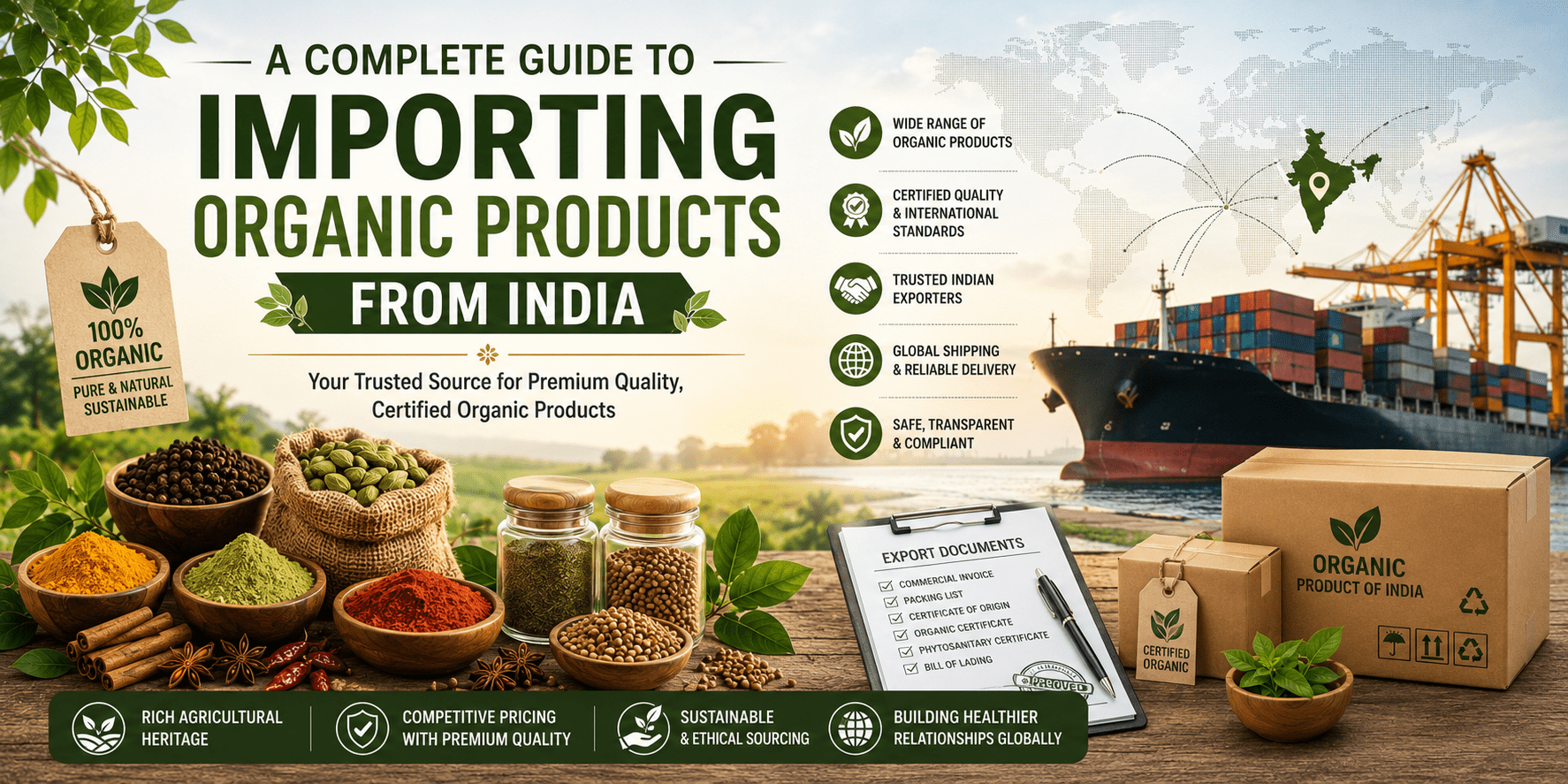
As global demand for healthy, sustainable, and chemical-free food products continues to rise, India has emerged as one of the world’s leading suppliers of organic agricultural products. From organic spices and herbal powders to superfoods and natural ingredients, Indian exporters are serving buyers across North America, Europe, the Middle East, and Asia-Pacific.
For importers looking to source high-quality organic products, India offers a unique combination of agricultural diversity, competitive pricing, and internationally recognized quality standards.
This guide explains everything buyers need to know about importing organic products from India, including certifications, supplier selection, documentation, quality assurance, and best practices for successful sourcing.
India is one of the largest agricultural producers in the world and has become a trusted source of organic products for international markets.
India exports a wide range of organic products, including:
Organic spices
Moringa powder
Psyllium Husk (Isabgol)
Makhana (Fox Nuts)
Herbal powders
Pulses and grains
Tea and coffee
Oilseeds
Processed organic ingredients
This diversity allows buyers to source multiple products from a single region, simplifying procurement and logistics.
India’s varied climate and fertile soil support year-round cultivation of numerous crops, ensuring consistent supply and product availability.
Compared to many global suppliers, Indian exporters can offer high-quality organic products at competitive prices while maintaining international quality standards.
India has developed strong export systems, including processing facilities, certification bodies, logistics networks, and regulatory support, making international sourcing efficient and reliable.
One of the most important aspects of importing organic products is ensuring certification compliance.
Organic certification verifies that products are grown, processed, and handled according to approved organic standards.
This confirms that products meet recognized organic farming and processing requirements.
The Agricultural and Processed Food Products Export Development Authority (APEDA) regulates and promotes organic exports from India.
The Food Safety and Standards Authority of India ensures food safety and quality standards.
Hazard Analysis and Critical Control Points certification demonstrates food safety management systems.
Good Manufacturing Practices certification verifies standardized production and quality control processes.
Important for buyers serving Muslim-majority markets such as the UAE, Saudi Arabia, Kuwait, Oman, and other Middle Eastern countries.
India is globally recognized for producing premium-quality spices, including:
Turmeric
Black Pepper
Cardamom
Cumin
Coriander
Chili Powder
Garlic Powder
Onion Powder
Organic spices are highly sought after due to growing demand for clean-label food products.
Known as a nutrient-dense superfood, organic moringa powder is increasingly popular in dietary supplements, functional foods, and wellness products.
India is one of the world’s largest producers of psyllium husk, which is widely used in health supplements and digestive wellness products.
Makhana has become a popular healthy snack ingredient in international markets due to its nutritional profile and versatility.
Selecting the right supplier is critical for long-term success.
Always request copies of relevant certifications and ensure they are current and issued by recognized authorities.
Reliable exporters should maintain strict quality control procedures throughout sourcing, processing, packaging, and shipment.
Ask suppliers about:
Laboratory testing
Residue testing
Moisture analysis
Product traceability
Quality assurance protocols
Experienced exporters typically have better understanding of:
International regulations
Packaging requirements
Shipping procedures
Documentation processes
Before placing large orders, request product samples to evaluate:
Aroma
Flavor
Color
Purity
Packaging quality
Overall consistency
International buyers should ensure that exporters provide the necessary export documentation.
Common documents include:
Contains product descriptions, quantities, pricing, and transaction details.
Provides shipment packaging details and carton specifications.
Confirms the country of manufacture and export.
Verifies compliance with applicable organic standards.
Certifies that agricultural products meet plant health requirements.
Serves as proof of shipment and transportation documentation.
Many buyers request laboratory reports to verify product quality and compliance.
Packaging plays a critical role in maintaining product quality during international transit.
Effective export packaging should:
Protect against moisture
Preserve freshness
Prevent contamination
Meet destination-country regulations
Support product shelf life
Many exporters also offer:
Private labeling
Custom packaging
Retail-ready packaging
Bulk packaging solutions
Shipping methods depend on product type, volume, destination, and delivery timelines.
Best suited for:
Large-volume shipments
Cost-effective transportation
Bulk organic products
Recommended for:
Smaller quantities
Urgent deliveries
High-value products
Buyers should discuss shipping terms such as FOB, CIF, and EXW with suppliers before finalizing orders.
Low pricing should never be the sole factor in supplier selection. Product quality and reliability are equally important.
Failure to verify certifications can result in regulatory issues and shipment delays.
Always conduct sample evaluations and request testing documentation before large purchases.
Strong communication between buyer and supplier helps prevent misunderstandings and operational disruptions.
The global organic market continues to expand as consumers prioritize healthier and more sustainable products.
India offers several advantages:
Reliable organic supply chains
Wide product selection
Competitive pricing
International certifications
Experienced exporters
Strong agricultural heritage
These strengths have positioned India as one of the most preferred sourcing destinations for organic products worldwide.
Importing organic products from India offers significant opportunities for wholesalers, distributors, retailers, and food manufacturers seeking premium-quality, certified organic products.
By understanding certification requirements, evaluating suppliers carefully, reviewing documentation, and prioritizing quality assurance, buyers can establish successful long-term sourcing partnerships.
As demand for organic products continues to grow globally, partnering with a trusted Indian organic products exporter can provide access to high-quality products, sustainable sourcing practices, and a reliable supply chain capable of supporting business growth in international markets.